

Pay C.J. Stroud: Houston Needs to Fix the Problem, Not Replace the Quarterback

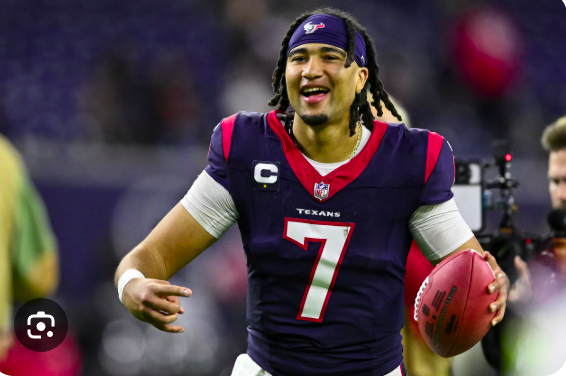
The Texans Already Know What They Have
The NFL is a quarterback-driven league. You can have a talented defense, explosive receivers, and an excellent coaching staff, but if you don't have a quarterback, your championship window can close before it ever opens.
That's why the Houston Texans need to think long and hard before hesitating on a long-term commitment to C.J. Stroud.
The conversation surrounding Stroud has become increasingly critical, and some of it is deserved. He's had stretches where the offense has struggled, and he needs to become more consistent. But before Houston starts questioning whether Stroud is the guy, maybe the organization should look at the environment it's given him.
Since entering the league in 2023, Stroud has helped Houston win the AFC South and advance in the playoffs in each of his first three seasons. He transformed a franchise that had been searching for direction into a team with legitimate postseason ambitions.
That's not something you casually throw away.
The Texans have a quarterback who has already helped them win. Now they need to give him the infrastructure to keep winning.
The Offensive Line Has Been a Problem

Let's talk about the elephant in the room: Houston's offensive line.
For much of Stroud's career, pass protection has been a major concern. In 2024, he was sacked 52 times in 17 regular-season games. That's a brutal amount of punishment for a young quarterback, and it illustrates the challenges he's faced trying to operate within the offense.
Think about what that means for a quarterback's development.
You want Stroud to stand tall in the pocket, go through his progressions, and deliver accurate throws downfield. But how is he supposed to do that consistently when defenders are getting into the backfield and disrupting the timing of plays?
Quarterbacks are responsible for recognizing pressure, getting the ball out, and making adjustments. Stroud isn't exempt from those responsibilities. He has to improve his pocket awareness and decision-making when the protection breaks down.
But there's a difference between holding a quarterback accountable and expecting him to overcome the same structural problems every week.
You can't keep asking a quarterback to operate under pressure and then act surprised when the offense becomes inconsistent.
If Houston believes Stroud is its franchise quarterback, protecting him should be one of the organization's biggest priorities.
Where Is the Consistent Running Game?

The second issue is the running game.
Since Stroud entered the league, Houston has struggled to establish the kind of dependable rushing attack that makes life easier for a quarterback. There have been productive individual seasons, including Joe Mixon's 1,016 rushing yards in 2024, so it wouldn't be accurate to say the Texans have never had a productive running back. The bigger problem is sustaining that production and building a consistently effective ground game.
A reliable running game does more than produce rushing yards. It keeps defenses honest, creates manageable third downs, helps control the clock, and takes pressure off the quarterback.
When defenses don't respect the run, they can devote more attention to the passing game. That means tighter coverage, more pressure packages, and fewer easy opportunities for the quarterback.
Look at what Houston needs from Stroud. He has to move the offense, make explosive throws, convert third downs, and carry the team through difficult stretches. If the running game isn't consistently forcing defenses to respect it, the burden on the passing attack becomes even greater.
You can't expect Stroud to be the engine of the entire offense every single week.
Give him a dependable offensive line. Give him a running game that can consistently gain tough yards. Make defenses defend the entire field.
Then evaluate the quarterback with a more complete offense around him.
Three Years of Winning Should Count for Something

Here's the part of this debate that shouldn't get lost in the criticism.
Stroud helped Houston win the AFC South and a playoff game in each of his first two seasons. That matters because postseason success isn't guaranteed, even for teams with talented quarterbacks.
His rookie season was especially impressive. In 2023, he threw for 4,108 yards, 23 touchdowns, and just five interceptions in 15 games. He won Offensive Rookie of the Year and helped lead Houston to a playoff victory over Cleveland.
That season changed the conversation around the Texans. Suddenly, they weren't simply a rebuilding team hoping to find a quarterback. They had a young player who could lead a competitive offense and deliver when the stakes were high.
Houston returned to the playoffs in 2024, winning another postseason game. Although the offense has experienced inconsistency, Stroud has already been part of a team that knows how to win in January.
Of course, team success isn't solely a quarterback statistic. The defense, coaching staff, and supporting cast all deserve credit. But Stroud has already demonstrated that he can help lead a winning franchise.
Why should a difficult stretch automatically outweigh that history?
The Texans don't need to pretend Stroud is perfect. They need to recognize that he's shown enough to make investing in his development a serious priority.
Stop Expecting Him to Be the Entire Offense

This is where Houston has to make a decision about its philosophy.
Does the organization want to build a complete offense, or does it expect Stroud to make everything work regardless of the circumstances?
Because those are two very different approaches.
The best teams don't simply pay their quarterback and leave him to figure everything out. They invest in protection, develop their running game, surround him with reliable playmakers, and create an offensive system that plays to his strengths.
Stroud has shown that he can make high-level throws and produce explosive passing performances. Against Dallas in Week 4 of the 2026 season, he threw for 347 yards and two touchdowns. Houston still lost 34–30, while its running backs combined for only 46 rushing yards and the offensive line surrendered two sacks.
That game captures the larger issue: a quarterback can have a productive individual performance without the team doing enough to win.
And that's why the conversation needs to go beyond his passing statistics.
If Houston wants to contend for a Super Bowl, it needs to stop treating offensive-line play and rushing production as secondary concerns. Those are fundamental parts of building a sustainable offense.
The Quarterback Market Isn't Waiting for Houston

Here's another thing the Texans need to consider: the quarterback market keeps going up, and waiting doesn't necessarily mean getting a better deal.
Look at the numbers. Patrick Mahomes' contract averages $64 million per year, Dak Prescott's averages $60 million, and several other established quarterbacks have deals averaging $55 million annually. The broader point is that elite quarterback contracts have moved into a price range that would have seemed extraordinary just a few years ago.
And that's the point.
The NFL doesn't wait for every quarterback to win a Super Bowl before paying him. Teams pay for production, potential, positional value, and the cost of finding a replacement. The market is constantly being reset, and the next major extension can make yesterday's expensive contract look reasonable.
If Houston waits another year or two and Stroud returns to playing at the level he showed during his rookie season, the Texans could find themselves negotiating an even more expensive deal.
Think about it: if quarterbacks are already commanding $55 million to $64 million per year, what will the market look like when the next wave of young quarterbacks signs their extensions?
Houston has to decide whether it wants to negotiate from a position of commitment now or potentially face a higher price later. Of course, waiting could also benefit the Texans if Stroud struggles, so there's risk on both sides. But the organization cannot ignore how quickly the market is moving.
And let's be clear: this isn't an argument that Stroud automatically deserves more money than every quarterback making $55 million. It's an argument that Houston needs to evaluate his value against the market he'll actually be negotiating in.
Stroud is still young, has already helped Houston win division titles and playoff games, and has shown he can play at a high level. The Texans also need to consider the offensive line and running game that have made his job more difficult.
You don't want to overpay a quarterback who isn't your guy. But you also don't want to spend years searching for a replacement, only to end up paying even more for someone who may never reach Stroud's ceiling.
The Texans need to get the contract right, but they shouldn't pretend the market is going to stand still while they figure it out.
Should Houston Pay Him Now?

There is a legitimate argument for caution.
Stroud's passing production declined after his rookie season, and Houston's recent struggles have raised questions about the team's consistency. A major contract extension would commit significant money to one player and affect how the Texans construct the rest of their roster.
Paying a quarterback doesn't guarantee championships. Houston has to be confident in Stroud's development, his ability to limit mistakes, and the direction of the offense.
But here's the distinction: questioning the timing and structure of an extension is not the same as deciding Stroud isn't worth investing in.
The Texans should be working toward a long-term plan that rewards his accomplishments while leaving enough resources to improve the offensive line and running game.
If Houston pays Stroud and then fails to fix those weaknesses, it will have wasted an opportunity to maximize his talent.
The contract should be the beginning of the next phase of team building, not the end of it.
Final Verdict: Pay C.J. Stroud and Build Around Him

Houston has already experienced what life can look like with Stroud playing at a high level. He's led the franchise to division titles, delivered postseason victories, and shown the ability to produce explosive passing performances.
He's also played through seasons in which the offensive line and running game haven't consistently supported him.
That doesn't excuse every mistake. Stroud must continue developing, improve his consistency, and prove he can lead the Texans through adversity. Franchise quarterbacks have to elevate their teammates, especially when the team is struggling.
But the Texans have responsibilities, too.
They need to protect their quarterback. They need a running game that can take pressure off the passing attack. And they need to stop expecting one player to compensate for every weakness on the roster.
They also need to recognize the financial reality of the NFL. Quarterbacks are becoming more expensive, and waiting carries its own risks. If Houston believes Stroud is the right man to lead the franchise, it should seriously consider securing his future while building a better team around him.
Finding a franchise quarterback is difficult. Finding one who has already helped you win division titles and playoff games is even more valuable.
Houston shouldn't make its decision based on nostalgia for Stroud's rookie season, but it shouldn't ignore what he's accomplished, either.
Pay C.J. Stroud. Fix the offensive line. Establish the running game. Build a complete offense.
Because if the Texans want to know whether Stroud can lead them to a championship, they need to give him a team capable of getting there.


Comments